


Choosing the right ceiling fan
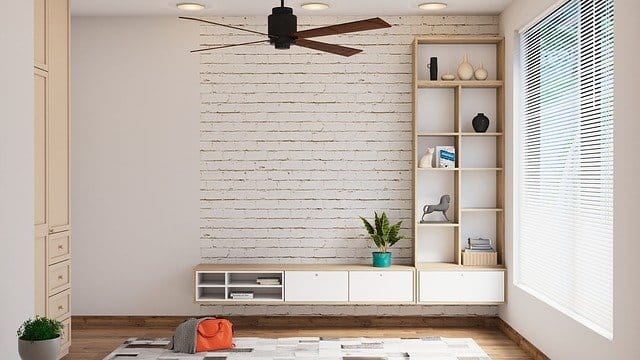
In the face of global warming and the sometimes modest size of city dwellings, a ceiling fan is the space-saving solution for coping with the heat.
But before deciding on the model and brand, it’s important to study a few parameters that will enable you to make an informed choice. This will enable you to truly meet your expectations, and even exceed them, as this type of fan can also meet needs other than that of cooling the ambient temperature.
What is a ceiling fan?
This is electrical equipment with a propeller (itself made up of blades) connected to a central hub. This is connected to a drive shaft powered by an electrically-driven motor. Its ceiling-mounted installation explains its name.
The best ceiling fans
Depending on individual criteria, several qualities can be highlighted: sturdiness, lighting, design, discretion, but also fin speed and low power consumption. All this to fulfill its primary function: air cooling.
Robustness: most of the blades are made from high-quality wood and metal. This composition enables a system to operate for between 5 and 15 years (for the motor). Some fans come with a lifetime warranty.
Discretion: this criterion is not incidental if the equipment is to be installed in a studio. Quiet operation means no nuisance in the room concerned. The price of this option makes the investment a little more expensive, but comfort is clearly improved.
Blade speed: on some models, the intensity of blade rotation is adjustable. This saves energy and enhances comfort by adapting the room temperature to the degree of cooling required.
The brand: to avoid unpleasant surprises, you can opt for a brand that is already well established on the market, which will guarantee the quality of the appliance and provide after-sales service, if required.
How does a ceilingon a ceiling fan work?
The main component of this household appliance is its blades. In fact, it is thanks to their rotation that the air in the room is renewed. So it’s only natural to attach particular importance to this component.
Depending on the model, the number of blades varies from two to five. However, the number of blades does not necessarily determine the efficiency of the model. In fact, a fan’s performance is determined by its rotational speed and the inclination of its blades: the greater the inclination, the greater the amplitude of action. The inclination can be as high as 18° for the best models.
The length of the blades depends on the size of the room, although several fans can be installed in the same room.
Most people think of fans only in terms of air cooling. However, depending on the direction of rotation of the blades, this equipment can also significantly reduce :
- heating bills in the home thanks to improved heat circulation;
- stagnant humidity, which can sometimes prevail in some poorly ventilated rooms, by continuously stirring the air.
What are the different types of ceiling fans?
Ceiling fan with light
Having mentioned the functions of heat distribution and dehumidification in the room concerned, the ceiling fan also fulfills its mission as a luminaire through a lighting system. This is very practical if you wish to install the fan in place of a ceiling light.
In fact, some models of ceiling fan can be fitted with a light bulb, providing a level of brightness that can be adjusted by remote control.
Various models are available on the market:
- the classic globe model with a classic 60 W bulb;
- the more elaborate tulip-shaped model with 3 to 4 lighting points, each rated at 60 W;
- the “state-of-the-art” model, with incandescent or halogen spotlights.
Ceiling fans with style
§ The manufacturing material
Depending on the style and ambience you want to bring to your room, you’ll choose the type of material for your fan.
From vintage to modern, the many models on the market offer different blade materials:
ü in plastic for less expensive, classic models ;
ü metal (brushed nickel) for industrial and more contemporary models ;
ü wood for exotic, colonial or rustic models.
§ Design
In addition to its ventilation function, this type of fan (more than any other) is a decorative element not to be overlooked, as it can bring a touch of prestige to the room. It’s therefore important to choose the right look and feel to ensure harmony with existing décor.
Ceiling fan with remote control
Thanks to its remote control, the fan can be remotely controlled and allows :
- Flexibility in setting the various functions: speed, reversible summer/winter function, lamp ;
- More precise adjustment of these settings.
What a simple switch can’t do.
The modern ceiling fan
The latest-generation equipment enables :
- respect for the environment;
- controlled energy management;;
- and ease of use.
Some models are silent, economical (thanks to their low-energy bulbs) and programmable via a remote control that turns off the motor when required.
Where to use ceiling fans?
We imagine it installed in a fairly spacious room with a high ceiling, especially if the equipment is not silent.
For easier installation, lightweight fans are preferable, especially if you’re unsure of the ceiling’s solidity. Special arrangements are required for false ceilings.
These fans are designed for both domestic use (living rooms, bedrooms, balconies and terraces) and professional use (offices, waiting rooms), and can easily find their place.
How much do ceiling fans cost?
With different makes and models, from the most basic to the most elaborate, ceiling fans range in price from €40 to over €800 for top-of-the-range items installed, for example, in luxury hotel suites or apartments.