


Air blower: buying guide
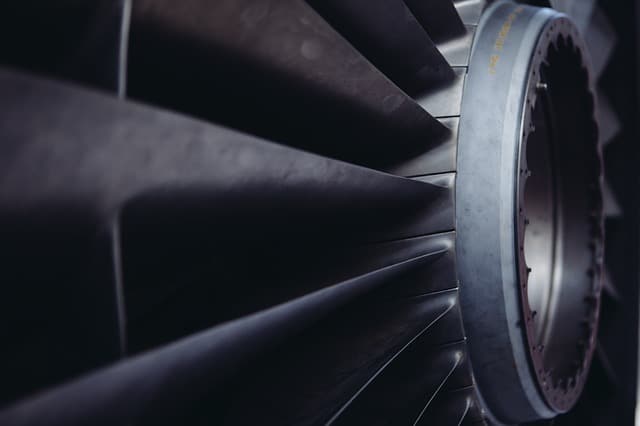
An air-mixer is a device designed to transform ambient air and make it more pleasant, especially in summer. Its varying degrees of ventilation power enable it to stir the air in enclosed spaces, whatever their volume. O’Fresh tells you more.
What is an air blower?
The air blower is a member of the fan family. It is similar to a fan, but its performance is much more powerful. In fact, it’s the fan’s impressive blowing capacity that sets it apart. As such, it is primarily intended for industrial ventilation and air treatment in large spaces. This is why they are more commonly used by professionals for cooling and ventilation:
- Garages
- Warehouses
- Production or handling plants
- Workshops
- Sports and entertainment venues
- Farm buildings, etc.
The air blower helps to keep the air cool in summer, especially when the heat generated by machines becomes unbearable in a poorly insulated building. This device is also reserved for professional environments, due to the loud noise emitted by the rotation speed of its metal blades.
As the needs of private homes are not the same (with much smaller volumes of air to be ventilated over a shorter period of time), a fan-type air-mixer is used instead.
Please note: an air blower is not an air conditioner. It’s a natural cooling device that uses only air circulation. It does not use any refrigeration process.
The air blower is simply placed on the floor or, in the case of a hanging model, mounted on a wall or ceiling.
How does an air blower work?
The air blower consists of a propeller with blades, mounted on a head (rotor), which can be tilted to various angles. It is activated by an ignition button, which sets the blades into a more or less powerful rotary motion, depending on the speed setting.
The moving blades create a vortex (a kind of cyclone) that will stir the air horizontally or vertically, depending on the type of air-mixer and installation method (floor, wall or ceiling). Air mixing produces a movement of cold and hot flows. This variation in flow results in an overall reduction in temperature, providing a sensation of freshness. Some units feature an oscillation function that helps distribute the swirling airflow optimally throughout the room. The higher the speed, the more powerful the air flow and the greater the freshness felt.
What are the different types of air blowers?
The ceiling fan
Also known as ceiling fans, ceiling fans are installed, as the name suggests, on indoor or outdoor ceilings. It is equipped with very long blades, activated either by an AC motor (alternating current motor) or a DC motor (direct current motor). The DC motor is a new-generation motor with the advantage of being extremely quiet. The DC motor also consumes much less energy: 5 Watts maximum at low speed and 30 Watts maximum at full speed, compared with 80 Watts maximum for an AC motor.
The ceiling fan has a summer and winter function, thanks to a “destratification” system based on reversed blade rotation. This is particularly useful in hot weather, when cool air is blown vertically downwards. In winter, the blades turn in the opposite direction to recover the warm air accumulated under the ceiling (heat rises) and return it to the floor, thus optimizing the heating emitted by other appliances.
The home brewer
There are three main types of domestic fans: axial fans (with blades), centrifugal fans (column fans) and fans without blades.
- Axial fans with blades consist of a propeller directly connected to the motor shaft that drives it. This produces a displacement of air that refreshes the atmosphere. These paddle-type fans are mounted on a pedestal or stand. The lightest models can easily be placed anywhere and moved from room to room. Some (for indoor use) even feature a misting system with water droplet spraying, an anti-mosquito function or essential oil diffusion.
- Centrifugal fans are column fans. In this case, it’s no longer a propeller that drives the air movement, but an impeller fitted with small blades that rotate in a housing. The centrifugal fan is less noisy than the axial fan. They are very popular in bedrooms, but show their limitations when it comes to cooling large rooms (even with the most powerful models).
- Blade-less fans represent a new generation of fans. Their rather complex technology was developed by the manufacturer Dyson and subsequently adopted by various brands. The propeller does exist, but given its very small size and position in the motor block, it is not noticeable. This futuristic-looking air blower is equipped with a hoop. The propeller sends a thin stream of air through the hoop. An aerodynamic phenomenon and an air friction drive multiply the air output. These units stand out for their silence and high performance, but also for their price, which is much higher than that of other models.
The suspended air blower
This cylindrical helical fan is fitted with supply and suction grilles. It is used to homogenize the temperature in professional and industrial buildings, warehouses and basements. It can also be used to increase a generator’s air throw by extending its blast. This is the case when you need to heat a long tunnel or other long space. Thanks to its light weight and hooks, it’s easy to hang.
The professional air blower
These high-performance, propeller-driven units circulate large quantities of air, enabling them to cool large areas such as warehouses or factories. They are generally made of steel. These powerful fans are capable of moving up to 150 m3 per minute, or 9,000 m3 per hour. However, they take up a lot of space and can be placed directly on the floor or on a piece of furniture at the desired height.
The power of air blowers
It’s the unit’s wattage that determines whether it’s an air blower or a conventional fan. Fans offer between 40 and 60 watts of power, depending on the model. Air blowers are generally much more powerful, up to 120 Watts.
How much does an air blower consume?
According to ADEME, air mixers consume on average 20 times less electricity than air conditioners. Consumption depends on the unit’s power rating. The higher the wattage, the greater the energy consumption. To find out the annual consumption of an air-cooled fan, the calculation is the same as for any other household appliance:
Air blower power in watts X daily operating time in hours X number of days per year. The total is then divided by 1000 to give the annual consumption in KWH. For example, a 45-Watt air blower running 12 hours a day for 3 months/year will consume 48.6 KWH/year.
The price of air-breathers
The price of an air blower varies according to its performance and design. Prices range from €30 for a simple fan to €20,000 for a professional air blower.